A pool stays easier to manage when each cleaning task has the right tool, the correct sequence and a clear maintenance trigger. By the end, you will know how to assemble a compatible kit, schedule routine work, compare manual and automatic cleaners, and identify problems that equipment cannot solve.
Key takeaways
- Choose tools for your pool’s surface, dimensions and debris load.
- Clean the waterline, walls, floor and filter in a repeatable sequence.
- Match vacuum equipment to your filtration system and cleaning workload.
- Stop cleaning and investigate leaks, algae or cloudy water that persists.
Build the kit around your pool’s surfaces and dimensions
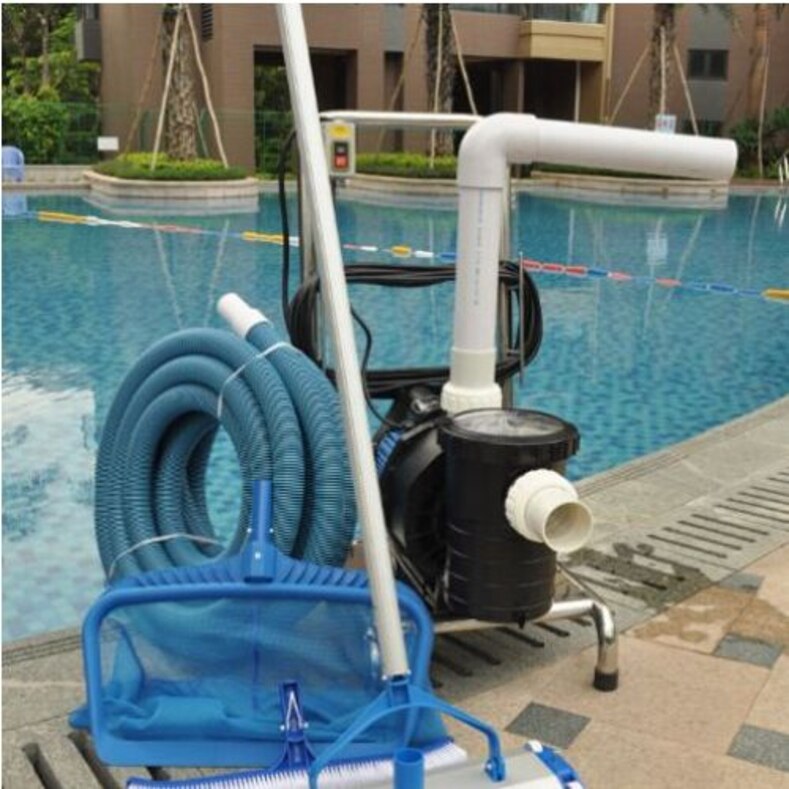
A practical pool cleaning kit contents list starts with the pool’s reach, surface and debris load:
- Telescopic pool pole matched to the pool’s deepest point and farthest edge
- Pool vacuum head sized to the pool and fitted for its surface
- Flexible vacuum hose long enough to reach every area without stretching
- Skimmer net for leaves and floating debris
- Wall brush with nylon bristles for vinyl, fibreglass and painted surfaces
- Floating thermometer and a water-test kit for pH and disinfectant checks
Choose a soft nylon brush for delicate finishes; use a stiffer brush only when the manufacturer permits it. An abrasive brush can dull a liner or remove a coating. A vacuum head that is too wide becomes difficult to steer, while one that is too small turns routine cleaning into slow manual work.
Measure the pool’s longest reach and deepest point before choosing the telescopic pool pole. Confirm the pole’s locking end matches the vacuum head and brush. Check the vacuum port or skimmer adapter, then match the flexible vacuum hose diameter and connector style; a nominal 1.5-inch hose is common, but the pool fitting decides.
Your filtration system changes the kit. Skimmer-fed manual vacuuming needs a compatible adapter and available suction. Cartridge filters are cleaned by removal and low-pressure hose rinsing, not backwashing; damaged pleats, end caps or cores require replacement. Sand filters use their specified backwash setting. Pipe-less systems need the maker’s proprietary head, hose or cartridge interface.
A kit cannot correct poor circulation or unsafe water: verify pH 7.0–7.8 and free chlorine of at least 1 ppm, subject to local code.
Follow one repeatable cleaning sequence
Use the same sequence each time: remove floating debris, loosen deposits, collect settled debris, clear baskets, service the filter, then check the water.
1. Skim leaves and insects from the surface before every swim, and do it daily during windy weather. Debris left in the water sinks, blocks baskets and increases the cleaning load.
2. Empty the skimmer and pump baskets after heavy debris, storms or unusually heavy use. Turn off the pump before opening either basket.
3. Brush pool walls, steps and the floor once a week, working toward the main drain or collection point. Brush before vacuuming so loosened dirt does not remain suspended.
4. Vacuum pool debris once a week, after brushing. Move the head slowly in overlapping passes; rushing stirs dirt instead of removing it. Vacuum again after storms or parties when sediment is visible.
5. Check the filter after vacuuming and follow its manual. For a pressure filter, record the clean-filter pressure after installation or service, then clean or backwash at the manufacturer’s stated rise; many manuals use about 8–10 psi above baseline, not a universal limit.
6. Test pH and free chlorine after circulation has mixed the water. CDC guidance gives pH 7.0–7.8 and free chlorine of at least 1 ppm for pools; verify your local code, especially when using cyanuric acid.
This pool maintenance schedule keeps daily debris removal separate from weekly cleaning and adds a complete inspection after rain, storms or heavy use. A cleaner cannot correct poor circulation or inadequate disinfection.
Match the cleaner to your filtration system and workload
Choose the cleaner that matches how much work your circulation system can carry, not only the pool’s surface area. A manual pool cleaning kit gives you the most control and adds no permanent equipment load, but vacuuming through the skimmer sends debris to the filter.
| Option | System demand | Best fit |
|---|---|---|
| Manual kit | Your pump operates during vacuuming; debris reaches the filter or waste line | Small pools, occasional debris, or systems with limited flow |
| Suction cleaner | Uses the pump and filter; needs the specified flow range | Pools with stable circulation and a clean filter |
| Pressure-side cleaner | Uses return pressure, sometimes from a booster pump; adds a debris bag | Heavy debris, when you want to reduce debris entering the main filter |
| Robotic cleaner | Has its own drive motor and debris basket or cartridge | Frequent cleaning, weak circulation, or reducing normal filter loading |
A suction cleaner can stall when a hose is too long or narrow, a valve is partly closed, the filter is dirty, or the skimmer admits air. Specify hose length, connection method and required flow before buying.
A robotic pool cleaner avoids that pump demand, but you still need to empty its basket and skim, brush and inspect circulation equipment.
Match maintenance to the filter. Use cartridge filter cleaning with a low-pressure hose, never a pressure washer; use sand filter backwashing according to the filter’s pressure trigger. A diatomaceous-earth filter needs its model-specific measured recharge after backwashing. Never assume a cleaner’s hose diameter proves the whole system is correctly sized.
Use the kit safely and know when cleaning is not the cure
Cleaning tools handle loose debris, settled dirt and surface film; they do not replace disinfection, circulation checks or repairs.
| Problem | What the kit can do | What it cannot cure |
|---|---|---|
| Leaves, insects and settled grit | Skim, brush and vacuum them out | Poor circulation or a blocked filter |
| Algae and cloudy water | Support pool algae removal by loosening growth | Incorrect pool water chemistry or inadequate sanitizer |
| Cracks, leaks and broken fittings | Reveal damage during inspection | Repair the shell, plumbing or equipment |
Keep water within pH 7.0–7.8 and maintain at least 1 ppm free chlorine for a pool, then verify your local code when using cyanuric acid. Brushing algae without correcting those readings simply spreads growth and wastes effort.
Protect surfaces with the correct head. Use a soft vinyl liner pool brush on vinyl, avoid wire brushes unless the surface manufacturer permits them, and do not force a vacuum head across sharp fittings. Clean cartridge filters by removing them and using a low-pressure hose; never backwash or pressure-wash cartridge media.
Recharge a diatomaceous-earth filter with the model’s specified measured quantity after cleaning.
- Never use a suction cleaner or manual vacuum head as protection against drain entrapment.
- Stop if a drain cover is missing, loose or cracked; replace it with a compliant cover before cleaning.
- Keep hands, hair and clothing away from uncovered suction points, and never block a drain to improve cleaner performance.
- Inspect hoses for air leaks and confirm the cleaner’s required flow, because a stalled cleaner can leave the system without proper circulation.
Ask a supplier for compatibility details, not a generic promise
A compatibility claim is useful only when it names the equipment, limits and installation conditions behind it. Ask the pool cleaning kit supplier for documents you can compare with your pool, fountain and irrigation drawings.
1. Request the cleaner’s model number, required hose diameter, connector type, pole reach, minimum water depth and compatible surface materials. “Fits pools” does not confirm that the head reaches your dimensions or that its fittings match your vacuum line.
2. Request pump, filter and cleaner flow requirements, plus the electrical supply, rated voltage, current, grounding, bonding and installation instructions. A listed cleaner still fails if the circuit, power supply or bonding arrangement is wrong.
3. Ask for the filter’s clean-pressure recording method and the manufacturer’s cleaning trigger. Many manuals use a rise of about 8–10 psi above the clean baseline, but the kit must not substitute a universal limit for the model’s instruction.
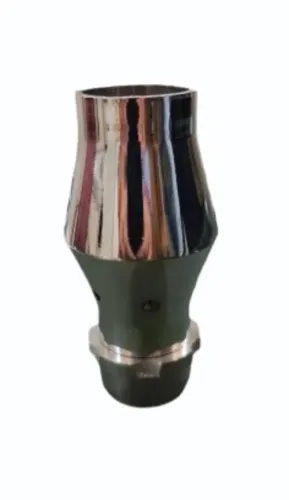
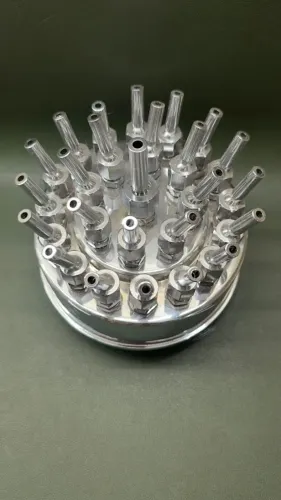
4. For fountains, obtain the nozzle flow-versus-pressure chart and the recommended fountain nozzle filtration, strainer location and allowable mesh size. Nozzle diameter alone cannot predict jet height or shape; debris can create an uneven display without a pump failure.
5. Keep irrigation separate: request the irrigation rain gun specifications showing nozzle size, operating pressure, flow, radius and spacing. A rain gun is a high-flow impact sprinkler, not a pool accessory, and wind can distort its wetted pattern.
Samudra Industries can be asked to place these model-specific details on the quotation rather than relying on a generic pool equipment supplier statement. Also confirm that cleaning hardware cannot correct weak circulation or poor disinfection; verify local requirements, including pH 7.0–7.8 and free chlorine of at least 1 ppm where CDC guidance applies.
Related products
 | Swimming Pool Products # Cleaning Kit Samudra Industries offers high-quality **Cleaning Kits** designed for effective maintenance and cleaning of swimming pools, fountains,... View product → |
 | Swimming Pool Products Samudra Industries is a trusted supplier of premium-quality Pool Accessories designed to enhance the functionality, safety, cleanliness, and... View product → |
Frequently asked questions
How should you choose the contents of a pool cleaning kit?
Build the kit around your pool’s surface, dimensions, depth, reach requirements and typical debris load.
What pool cleaning sequence keeps routine work simple?
Remove floating debris, brush the waterline and walls, vacuum the floor, then clean or backwash the filter as required.
How do you match a pool cleaner to the filtration system?
Check whether the cleaner connects to suction, pressure or an independent electric system, then confirm hose, pump and filter compatibility.
When will pool cleaning not solve the problem?
Investigate water chemistry, leaks, circulation faults or persistent algae when cleaning does not clear cloudiness or deposits.
What should you ask a pool cleaning kit supplier?
Ask for connection sizes, compatible pool surfaces, required pump flow, hose length, replacement parts and operating instructions.
Related products
 | Swimming Pool Products Samudra Industries offers premium-quality Swimming Pool Filters designed to maintain clean, hygienic, and crystal-clear pool water for residential,... View product → |
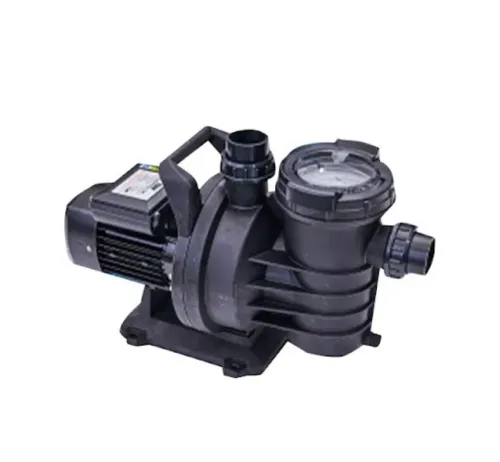
 | Swimming Pool Products Samudra Industries offers high-performance Pool Pumps designed for efficient water circulation, filtration, and maintenance in swimming pools,... View product → |
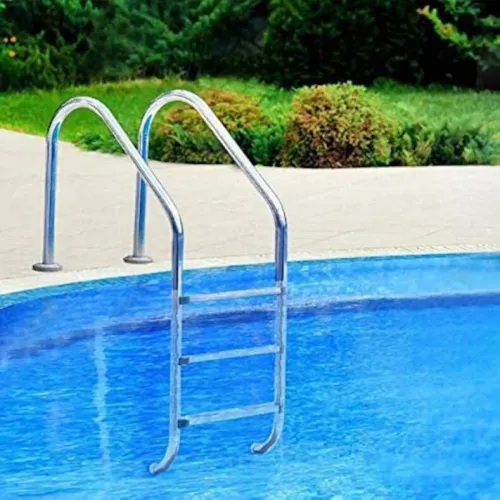
 | Swimming Pool Products Samudra Industries offers premium-quality Pool Ladders designed for safe, comfortable, and convenient access to swimming pools. View product → |
 | Swimming Pool Products Pipe Less Filter Samudra Industries offers high-performance Pipe Less Filter systems designed for efficient water filtration in swimming pools,... View product → |