A fountain can have powerful lamps and still look flat, glaring or uneven if the optics, mounting position, water pattern and control system do not work together. By the end, you will know how to brief a supplier, check an installation, commission scenes and plan maintenance around the display you want viewers to see.
Key takeaways
- Choose beam angle and position around the water effect, not wattage alone.
- Request lumen, beam, colour, IP rating and material data before comparing fixtures.
- Match mounts, cables and electrical protection to the existing fountain installation.
- Commission brightness, colour and choreography before opening the display.
Start with the water effect, viewing angle and night-time contrast
Choose the lighting position and beam angle before choosing a fixture. Jet height, plume diameter, spray density, water clarity, viewing distance and ambient light determine apparent brightness more than wattage; a high-output lamp that misses coherent water can look dimmer than a lower-output, correctly aimed one.
| Position | Visual result | Trade-off |
|---|---|---|
| From jet base | Defines a solid column, bubbles and internal turbulence | Strong upward glare and difficult submerged servicing |
| Beside nozzle | Reveals droplets, broken water and outer contours | Shadows and hot spots increase if the angle is too shallow |
| Around basin | Lights broad or short plumes evenly | More spill light, visible hardware and easier public glare |
| From above | Creates downward highlights or silhouette effects | Weak underside definition and difficult alignment over water |
Match the beam angle to the geometry: narrow optics suit tall, coherent jets but can create hot spots; wider optics cover broad plumes evenly but spill more light.
A supplier should prepare a fountain lighting layout that balances foreground and background brightness, keeps beams out of spectators’ eyes and tests whether underwater fixtures are needed at all.
Reject submerged hardware when chemical exposure is severe, access is impossible, water temperature exceeds its limit or electrical capacity is inadequate. Strict anti-glare sites may need recessed or indirect lighting, while a long-throw projector-style effect calls for a remote projector rather than a close fountain light.
Ask for photometric, colour and material data that wattage cannot provide
Compare lights by delivered light and control behaviour, not by wattage. Require separate figures for input power, LED-board power and driver-inclusive maximum power, plus lumen output, centre-beam intensity, beam angle and an IES file or LDT file when software modelling matters.
Ask for these scene-specific details:
- RGB or RGBW fountain lights; for RGBW, state the dedicated-white colour temperature and colour-rendering data such as CRI or TM-30.
- Dimming method, DMX512 capability and refresh behaviour for video cues.
- The colour-consistency target and calibration process, including how replacement fixtures are matched.
- The tested IP68 immersion rating: depth, duration, water temperature, cable condition and installation position.
- Operating temperature, LED and driver thermal limits, lumen-maintenance data, gasket construction and resistance to chlorine, salt, treatment chemicals and mineral scale.
DMX512 provides addressing, dimming and scene control. It does not provide automatic waterproofing, colour matching or pump synchronisation, so test hydraulic timing separately.
Compare housing materials against the actual water chemistry, galvanic contacts and maintenance access:
| Material | Strength | Check before selection |
|---|---|---|
| SS 304 | General corrosion resistance | Avoid where salt or aggressive treatment is present |
| SS 316 | Better resistance to chlorides | Confirm galvanic contacts and cleaning access |
| ABS | Electrical isolation and chemical resistance | Check impact strength and heat limits |
| Brass | Strong threaded hardware | Check dezincification and galvanic pairing |
| Aluminium | Low weight and heat transfer | Require a coating and verify treatment compatibility |
A supplier that cannot provide these figures leaves you comparing labels rather than a defined night-time scene.
Make the mounting, cable and electrical plan fit the existing fountain
A light fits only when the nozzle, bracket, cable route and electrical supply work together. Complete a nozzle-mounted light fit check before ordering, not after the basin is full.
1. Measure the nozzle or pipe diameter, clamp range, bracket anchor points, cable-entry position, fixture orientation and moving-water clearance. Confirm that a U-clamp installation will not obstruct the jet, and leave enough space to remove, clean and re-aim the unit without draining the basin.
2. Require a dimensioned drawing showing the nozzle-mounted or U-clamp adjustment, cable routing, strain relief, minimum bend radius, mated-connector IP rating, approved cable type and junction-box location. It must state whether connectors may be opened underwater; an IP68 lamp housing does not protect an exposed connector.
3. Confirm whether the system uses 12 V or 24 V, then document driver location, cable length, polarity, earthing, isolation and residual-current protection. Separate fixture load from driver input or transformer sizing will be wrong.
Calculate voltage drop on every long low-voltage run, because distant fixtures can dim or change colour even when the lamp rating is correct.
4. Keep responsibilities explicit. A fountain installer can position, align and secure de-energised equipment; a qualified electrician should size supplies, terminate circuits, verify residual-current protection and test isolation, bonding and wet-zone separation against IS 732, the Central Electricity Authority (Measures Relating to Safety and Electric Supply) Regulations, 2023, and site requirements.
Commission choreography, brightness and colour before opening the display
A successful fountain light commissioning turns installed hardware into a timed scene, not merely an illuminated basin. Begin with a wiring schedule and address map; label every fixture, record its cable and DMX address, terminate the DMX line correctly, then test each fixture alone before creating grouped scenes.
1. Coordinate the lighting controller with pumps, variable-speed drives, solenoid valves and media servers using a shared timebase. If that is unavailable, test and document cue offsets; a common DMX connection does not guarantee hydraulic synchronisation.
2. Run colour sequencing, fade times, chase speeds and music synchronisation at the actual water height and flow rate. A pattern that works during a dry test can miss the jet when pressure, plume shape or valve timing changes.
3. Set brightness from every public viewing position. Reduce foreground glare while keeping background jets visible, and adjust beam output rather than masking a poorly aimed fixture with excessive intensity.
4. Save three references: a neutral-white scene, saturated colours and a replacement-unit fixture calibration record. Repeatable fixture calibration prevents a replacement RGB or RGBW unit from producing a visibly different colour.
Use the fault pattern to direct investigation: dim output points to voltage drop, deposits or thermal limits; flicker suggests supply, control or connector trouble; colour mismatch indicates addressing, calibration or emitter variation. Nuisance tripping points to moisture or insulation faults, while condensation requires seal and thermal investigation. Isolate equipment before opening any wet component.
Buy the support package, not only the lamp, and plan its service life
A low lamp price can conceal the parts and labour that determine whether the display remains serviceable. Use this LED fountain-light supplier checklist before approving the order:
1. Request a current datasheet, installation drawing, wiring diagram, photometric file, immersion-test depth and duration, chemical-compatibility guidance, test report, warranty terms, batch traceability, spare-part policy and a video recorded with comparable water flow and ambient light.
2. Confirm stock status, minimum order quantity, lead time, protective packaging and replacement compatibility. Calculate total installed cost, including drivers, controllers, transformers, cabling, brackets, electrician time, access equipment and commissioning.
3. Require a service plan covering lens cleaning, mineral-scale removal, algae control, seal inspection, cable and mated-connector checks, driver replacement and seasonal shutdown. Chlorine, salt, poor pH control and scale can damage seals, jackets and housings even when a fixture carries an IP68 label.
4. Specify removable mounts so technicians can clean and re-aim fixtures without draining the basin. Keep the tested operating temperature and lumen-maintenance data with the handover documents; warm stagnant water, deposits and high drive current can shorten LED life.
When comparing Samudra Industries or another project partner, ask whether selection, fit checks, documentation, replacement planning and commissioning assistance are included for the actual nozzle and water-treatment regime. That support matters more than catalogue wattage alone.
Record fixture model, batch, driver and cable details in the as-installed drawings so a failed unit has a known substitute.
Related products
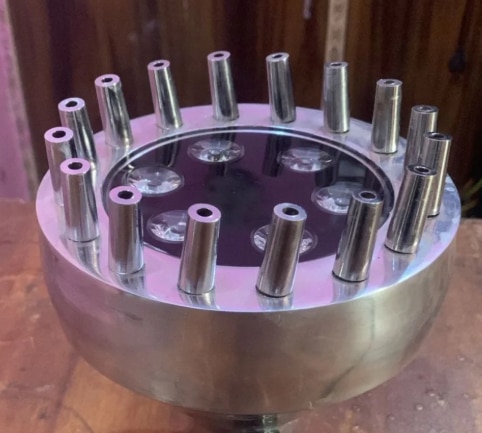 | Swiming Pool Lights And Fountain Lights 1.50"Inch Diamond Nozzle Led Light 1.5 Inch Diamond Nozzle LED Light – Samudra Industries Add brilliance and elegance to your fountain displays with the 1.5 Inch Diamond Nozzle LED... View product → |
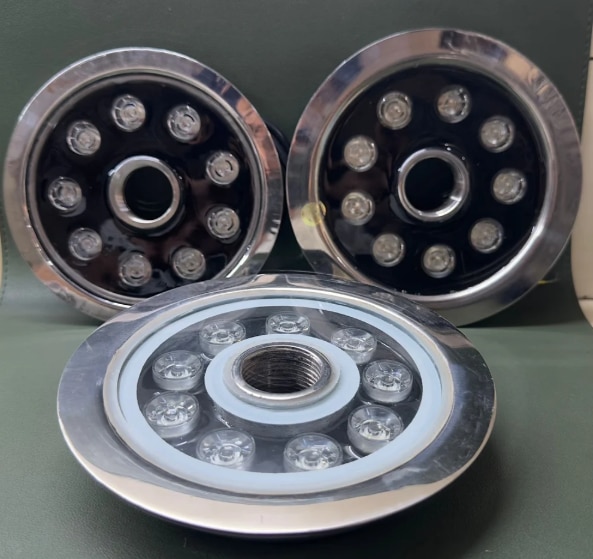 | Swiming Pool Lights And Fountain Lights 27 Watt SS 304 Nozzle Mounted LED Fountain Light ₹1950 Samudra Industries Price: ₹1,950 / Piece Minimum Order Quantity: 10 Pieces Enhance your fountain and pool lighting with the advanced 27 Watt SS 304... View product → |
Frequently asked questions
What should you assess before choosing LED fountain lights?
Assess jet height, plume diameter, spray density, water clarity, viewing distance, ambient light, viewing angle and night-time contrast.
Which LED fountain-light specifications matter beyond wattage?
Ask for photometric data, beam angle, lumen output, colour temperature or RGB capability, colour-rendering information, IP rating and housing material.
How should lights fit an existing fountain?
Plan mounting positions, cable routes, connectors, drivers, electrical protection and access for maintenance around the fountain’s existing structure.
What should commissioning include before a fountain opens?
Test brightness, colour balance, beam alignment, water-effect coverage and programmed choreography from the intended viewing locations.
Related products
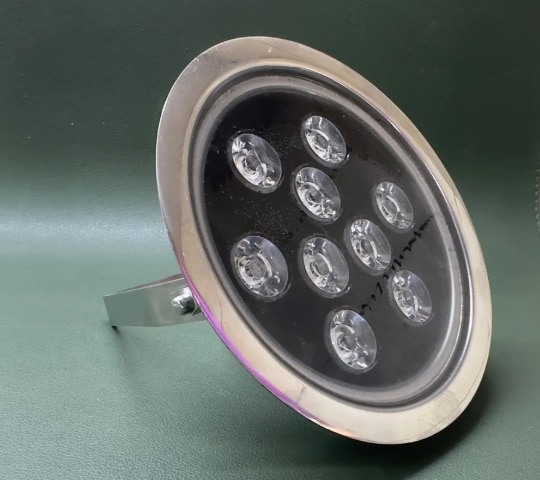 | Swiming Pool Lights And Fountain Lights 27 Watt SS 304 U Clamp LED Fountain Light ₹1950 Samudra Industries Price: ₹1,950 / Piece Minimum Order Quantity: 10 Pieces Illuminate your water features with the powerful and reliable 27 Watt SS... View product → |
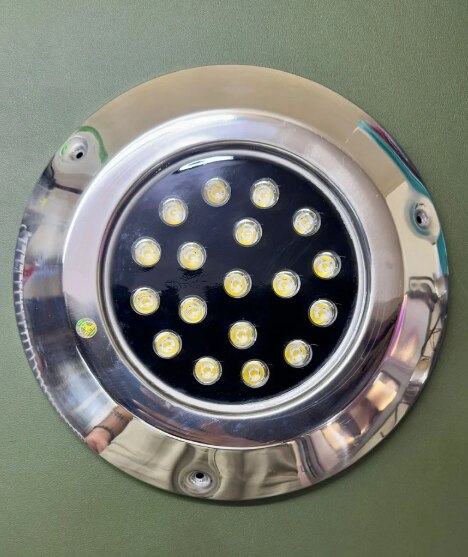 | Swiming Pool Lights And Fountain Lights ₹2450 Samudra Industries Price: ₹2,450 / Piece Minimum Order Quantity: 10 Pieces Enhance your pool and fountain lighting with the powerful 54 Watt SS 304... View product → |
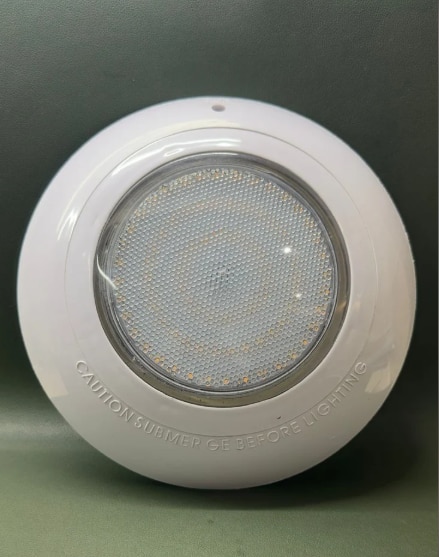 | Swiming Pool Lights And Fountain Lights 20 Watt ABS Body LED Pool Light ₹2000 Samudra Industries Price: ₹2,000 / Piece Minimum Order Quantity: 10 Pieces Illuminate your pool with efficiency and style using the 20 Watt ABS Body... View product → |
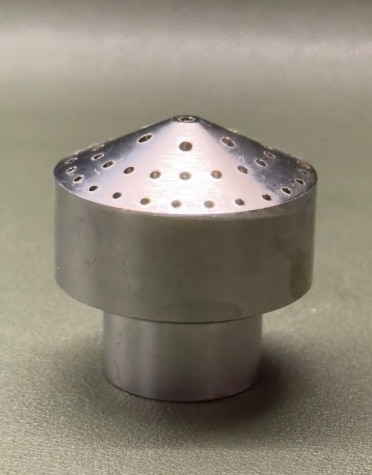 | Fountain Nozzle And Jet Nozzle 1 Inch Firework Fountain Nozzle Samudra Industries Create a spectacular and dynamic water display with the 1 Inch Firework Fountain Nozzle from Samudra Industries. View product → |