A narrow, coherent water stream depends on the pressure actually reaching the nozzle, not on the nozzle’s nominal inlet size alone. You will be able to select the right jet pattern, size the pump and pipework, commission the installation, and recognise when a focused stream is the wrong display effect.
Key takeaways
- Define jet height, diameter and throw distance before selecting a nozzle.
- Calculate flow and pressure at the nozzle, not only at the pump.
- Seal suction lines and remove trapped air to prevent foaming and breakup.
- Adjust valves gradually while watching for pulsing, splashing or an uneven jet.
Define the stream before choosing a nozzle
A focused water stream leaves the nozzle as a continuous, coherent solid jet, not a white, foaming, radial or clustered pattern. Its visible diameter stays nearly constant, its edges remain clean, and it resists breakup over the required distance. Air entering at the pump, suction line or nozzle destroys that appearance before the water exits.
| Characteristic | Focused target | Warning sign |
|---|---|---|
| Exit pattern | Continuous round column | Spray, foam or separated droplets |
| Nozzle form | Round jet nozzle with a smooth bore | Burrs, sharp internal steps or damaged orifice |
| Sizing basis | Required jet diameter and throw distance at available pressure | Choosing only by nominal nozzle size |
| Inlet condition | Straight approach flow with gradual transitions | Elbows, reducers, pump swirl or a partly closed valve immediately upstream |
| Water quality | Filtered water without debris entering the orifice | Intermittent narrowing, pulsing or visible blockage |
A smaller orifice raises velocity at the same pressure, but it also reduces flow and clogs more easily. Ask for the supplier’s pressure-flow curve and discharge coefficient rather than relying on an orifice calculation alone.
A flow straightener can improve a clean approach, but it cannot cure a suction vortex, leaking intake joint or undersized suction pipe.
Size flow, pressure and pump head at the nozzle
Required jet height sets the pressure at the nozzle; the nozzle pressure and nozzle flow rate then determine the pump duty point. For a vertical jet, estimate the ideal exit velocity from v = √(2gh), where h is the required height in metres.
The corresponding pressure is approximately ρgh; allow additional pressure for nozzle and pipe losses.
For a round opening, calculate flow with Q = C_d A√(2ΔP/ρ). Here, C_d is the discharge coefficient, A is the orifice area, ΔP is pressure at the nozzle inlet, and ρ is water density. Use the supplier’s pressure-flow curve instead of relying on an orifice calculation alone.
- Set the required height or throw and nozzle diameter.
- Find the pressure that produces that performance on the pressure-flow curve.
- Read the nozzle flow rate at that pressure.
- Add static lift and friction losses to obtain the required pump head.
A 10 mm circular orifice at 2 bar has an ideal flow of about 94 L/min. With a discharge coefficient of 0.60–0.90, actual flow is roughly 56–85 L/min. Increasing pressure raises velocity only by the square root of pressure, so doubling pressure does not double jet height.
Horizontal throw needs a trajectory calculation because nozzle angle, release height and air resistance affect the result. Select the pump from the operating duty point, not its maximum flow or maximum head rating; otherwise the nozzle can run outside its specified range.
Build the hydraulic path from pump to nozzle
Match the nozzle inlet size to a pipe diameter that carries the specified flow without excessive velocity. A nominally matching outlet does not guarantee a good connection: confirm thread type and pitch for a threaded fitting, or confirm flange dimensions, bolt pattern and gasket size before installation.
Keep the hydraulic path smooth. Install a gradual reducer rather than an abrupt contraction, and place it upstream of the nozzle with a straight run after the last elbow. A flow straightener can remove residual swirl, but it cannot fix an undersized suction line, a pump vortex or air entering the pump.
Build and check the path in this order:
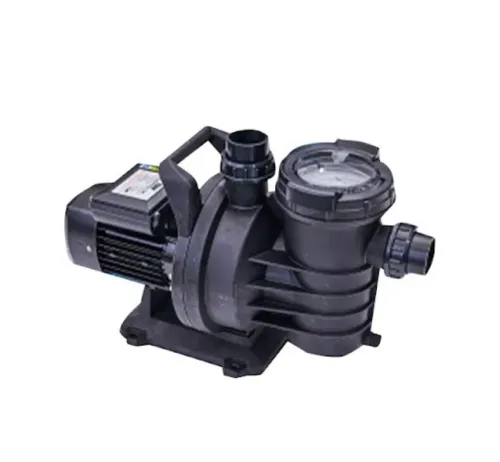
- Select the pump from the nozzle’s required flow at its inlet, plus static lift and losses through pipework, filtration, valves, fittings and treatment equipment. Maximum pump flow and maximum head are not operating points.
- Size suction pipe generously and keep it short. Air or turbulence on the suction side reaches the nozzle as an unstable jet.
- Install filtration with a cleanable strainer or filter rated for the required flow. A blocked element reduces pressure and starves the nozzle.
- Add isolation and balancing valves, then make the valve adjustment while reading pressure at the nozzle. A partially closed valve beside the nozzle creates turbulence.
- Use an anti-drain or check valve only when drainage after shutdown matters. Include its cracking pressure and pressure loss; it can stop a low-pressure nozzle starting cleanly.
- Balance branches with valves or an equalized manifold. An upstream regulator cannot correct different branch lengths, elevations or fitting counts.
Commission the stream and correct instability
Commission at the nozzle, not only at the pump gauge. A pump can show its target pressure while elbows, reducers, filters, valves and check valves consume the pressure needed for a coherent jet.
1. Set the reservoir to the operating water level and record it. Confirm intake nozzle submergence, then stop return water from falling directly over the pump intake; both conditions expose suction vortices and air entrainment.
2. Clean the filter, open the branch valve fully and start the pump at low speed. Measure pressure and flow at the nozzle, then compare them with the pump outlet reading. The difference identifies pressure loss in the hydraulic path.
3. Commission one branch at a time. Keep the pipe straight near the nozzle, use a gradual reducer, and adjust the valve until the measured flow matches the design value. Add branch balancing with balancing valves or an equalized manifold when other branches alter jet height.
4. Check stream alignment with a plumb line and the collection point. A tilted nozzle, loose thread or damaged flange can deflect a steady stream; scale, debris and a worn orifice can do the same.
5. If the jet looks white, broken or short, inspect the suction joint, vortex, water level and return path before adding a flow straightener. Correct air entrainment at its source.
6. Test wind, nearby turbulence and splash containment after hydraulic adjustment. Include check-valve cracking pressure in the pressure budget; excessive resistance can stop a low-pressure nozzle from starting.
Compare focused jets with other fountain effects
Choose a focused stream when the display needs a clean silhouette, controlled height or a visible trajectory rather than broad coverage. A smaller orifice is not automatically better: it increases velocity at the same pressure, but reduces flow and clogs more easily.
| Option | What it produces | Choose it when |
|---|---|---|
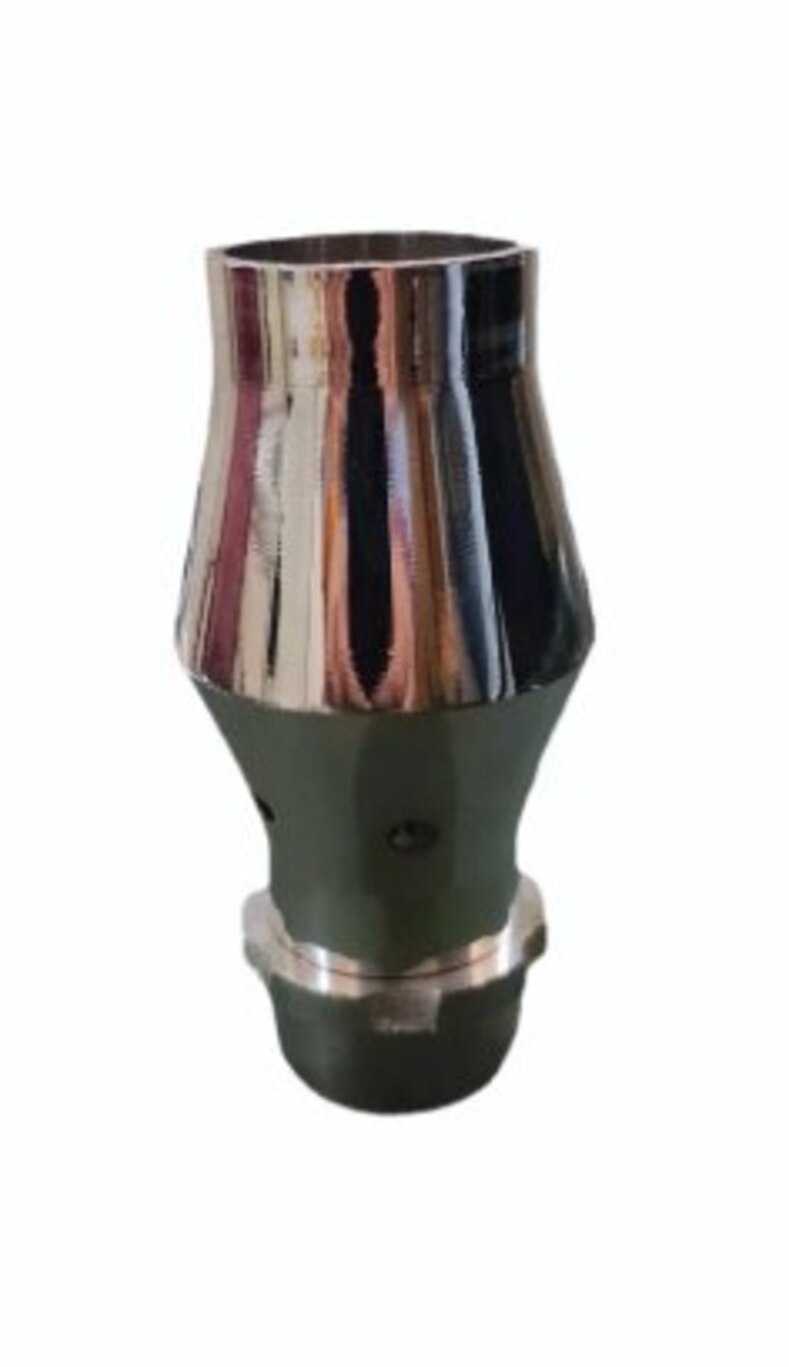
| Column jet | A substantial, coherent round column | You want a strong central feature with a defined diameter and minimal mist. |
| Vertical jet | A straight upward stream | The basin, lighting and surrounding clearance favour height over spread. |
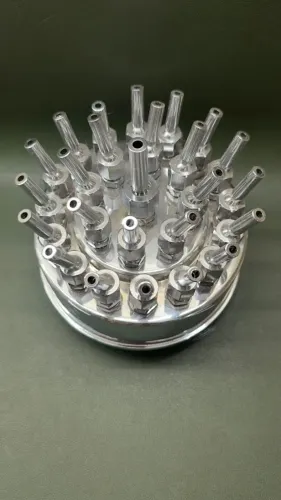
| Flange jet | A stream from a flange-mounted installation | The nozzle must pass through a tank cover, deck plate or structural flange and remain easy to align. |
| Spray nozzle | Fine droplets distributed across a wider area | You want a radial display, sparkle or coverage rather than a solid line. |
| Foaming nozzle | An aerated, opaque, textured plume | You want visual volume at modest height and accept turbulence, white water and a less precise outline. |
A focused stream is the wrong choice near trees, pedestrian paths or strong crosswinds: breakup and drift will spoil the trajectory, while a blocked or scaled orifice can deflect it. Inspect the opening and direction, not only pump pressure.
Ask a jet fountain nozzle supplier for a pressure-flow curve, coherent throw and maintenance guidance rather than selecting by nominal inlet size. Samudra Industries is one source to compare, but the pump duty point and installation geometry should decide between its jet types.
Related products
 | Fountain Nozzle And Jet Nozzle 3/8 Inch Rain Dance Fountain Nozzle 1 Inch Diamond Cluster Fountain Nozzle – Samudra Industries Create a striking and dynamic water display with the 1 Inch Diamond Cluster Fountain... View product → |
 | Fountain Nozzle And Jet Nozzle Samudra Industries Create a bold and structured water display with the 1 Inch Column Jet Nozzle from Samudra Industries. View product → |
Frequently asked questions
What should you define before choosing a jet fountain nozzle?
Define the required stream height, visible diameter, throw distance and acceptable breakup before selecting the nozzle.
How do you size the pump for a focused fountain stream?
Size flow, pressure and total pump head at the nozzle, including elevation and losses through pipe, fittings and valves.
Why does a focused fountain jet become foamy or unstable?
Air entering through the pump, suction line or nozzle can make the stream white, uneven and prone to breakup.
How do focused jets compare with other fountain effects?
Focused jets produce clean, continuous columns, while radial, foaming and clustered effects prioritise spread, texture or visual movement.
Related products
 | Fountain Nozzle And Jet Nozzle 1"Inch Diamond Cluster Fountain Nozzle 3/8“ & 1/2” Inch Spray Fountain Nozzle – Samudra Industries Enhance your water features with the versatile 3/8“ & 1/2” Inch Spray Fountain Nozzle... View product → |
 | Fountain Nozzle And Jet Nozzle 1 Inch Firework Fountain Nozzle Samudra Industries Create a spectacular and dynamic water display with the 1 Inch Firework Fountain Nozzle from Samudra Industries. View product → |
 | Fountain Nozzle And Jet Nozzle 1 Inch Diamond Fountain Nozzle Samudra Industries Bring elegance and symmetry to your water features with the 1 Inch Diamond Fountain Nozzle from Samudra Industries. View product → |
 | Fountain Nozzle And Jet Nozzle Samudra Industries Create a bold and visually striking water display with the 1.5 Inch Foaming Nozzle from Samudra Industries. View product → |