A dome-shaped water effect depends on more than choosing a nozzle with “umbrella” in its name. You need to match the outlet geometry, flow, pressure, pipework, basin dimensions and water quality so the circular sheet stays continuous, symmetrical and inside the catch area.
Key takeaways
- Measure basin diameter, nozzle height and available water depth before ordering.
- Match nozzle flow and pressure to the pump’s operating point, not its maximum rating.
- Filter water to protect the annular outlet and keep the dome pattern even.
- Request flow, pressure, dimensions and material details before approving the nozzle.
What Creates an Umbrella-Shaped Water Dome?
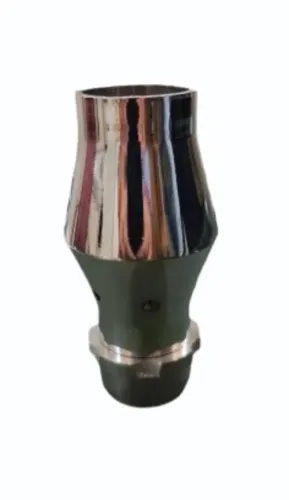
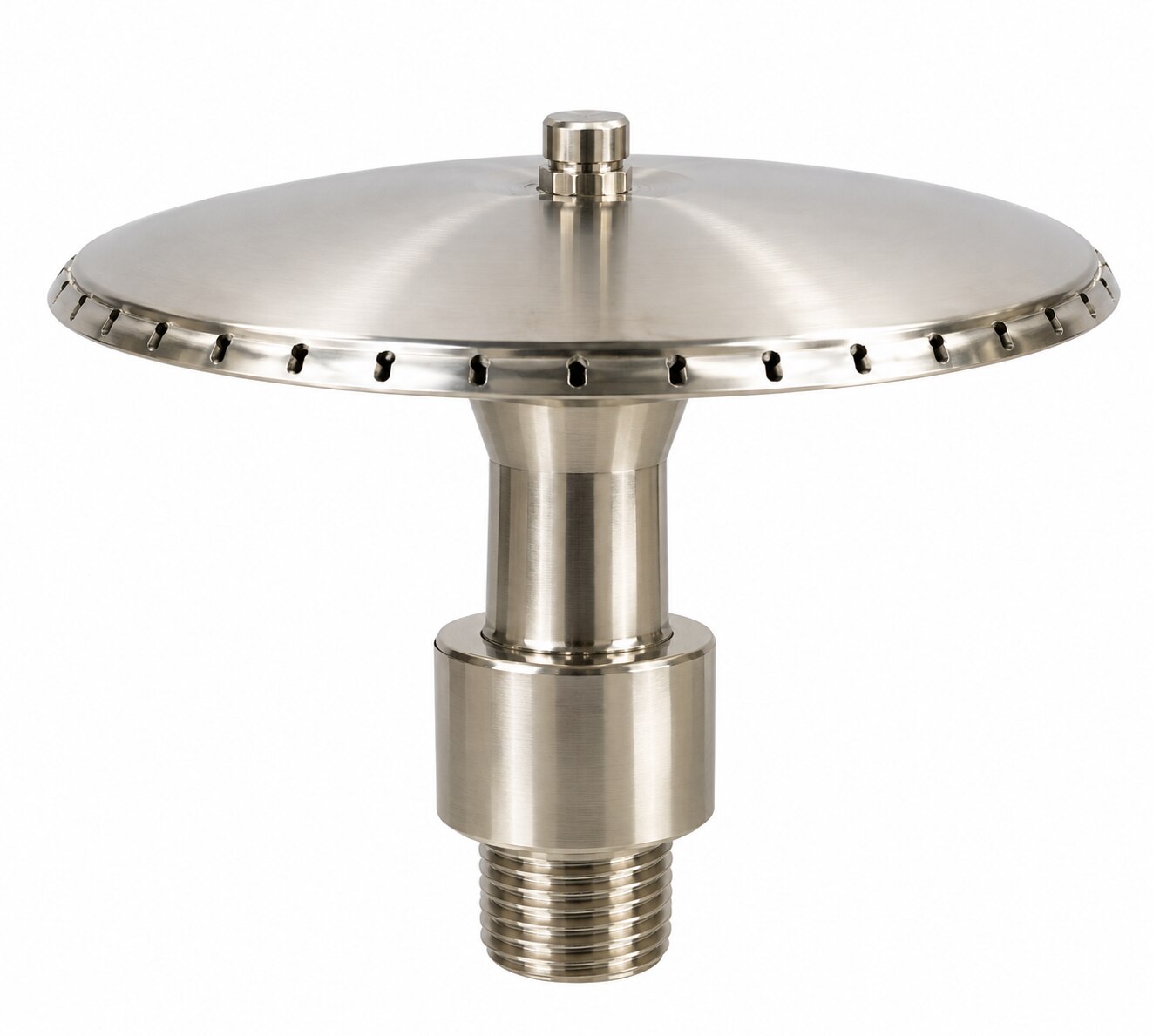
An umbrella fountain nozzle forms a dome-shaped water effect by forcing water through a circular annular outlet, the narrow ring between its body and cap. Water leaves radially as a thin sheet, then gravity bends it downward into a circular water curtain around the centre.
A mushroom fountain nozzle uses this principle, though suppliers apply these names inconsistently.
| Pattern | Visible result | Key difference |
|---|---|---|
| Vertical geyser | Narrow jet rising upward | Concentrates water vertically instead of spreading it outward |
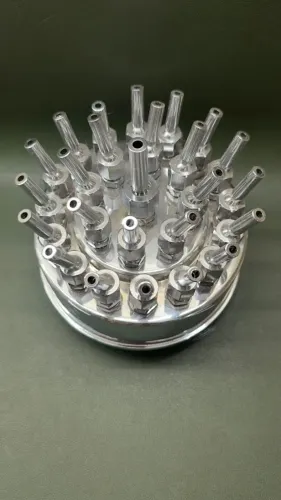
| Flower spray | Separate streams radiating from the centre | Produces distinct fingers rather than one continuous sheet |
| Foam pattern | Opaque, bubbly mass | Depends on air entrainment, not a clear falling film |
| Rain pattern | Droplets descending across an area | Breaks water into drops instead of maintaining a sheet |
| Bell-shaped curtain | Thicker, shaped curtain | Uses a bell lip and heavier film rather than a thin radial sheet |
The visible dome changes with these operating controls:
- Outlet geometry sets the sheet’s thickness, spread and likely diameter.
- Nozzle elevation gives the sheet more vertical distance to curve before it reaches the basin.
- Flow rate controls how far the sheet travels and how full the canopy appears.
- Pressure at the nozzle affects symmetry and continuity; pipe friction, fittings, valves, elevation and filter restriction reduce it.
- The surrounding basin determines the available landing area, splash containment and perceived dome height.
Which Design Measurements Must You Take Before Ordering?
Before asking for a nozzle recommendation, record the dimensions, hydraulics and site constraints that define the finished effect. A catalogue name cannot tell you whether the dome will stay inside the basin or whether the pump can sustain it.
- Target dome diameter and dome height
- Nozzle height above the water surface
- Basin water depth and clearance from the basin edge
- Splash-out space around the falling sheet
- Available pump flow in litres per minute and pump head in metres
- Pipe diameter, thread or flange connection type, and number of nozzles
| Site condition | What to measure | Design consequence |
|---|---|---|
| Wind exposure | Crosswind direction and strength at the installation | Use a lower dome, wind shielding or extra catch-basin width when wind can move water outside the basin |
| Fluctuating water level | Normal, minimum and maximum levels | Recheck nozzle height and dome dimensions at each level |
| Overflow and make-up water | Overflow route, drain capacity and refill rate | Prevent rising water from changing the pattern or flooding surrounding surfaces |
| Surge volume | Basin reserve above normal operating level | Capture start-up and splash-out water without overflowing |
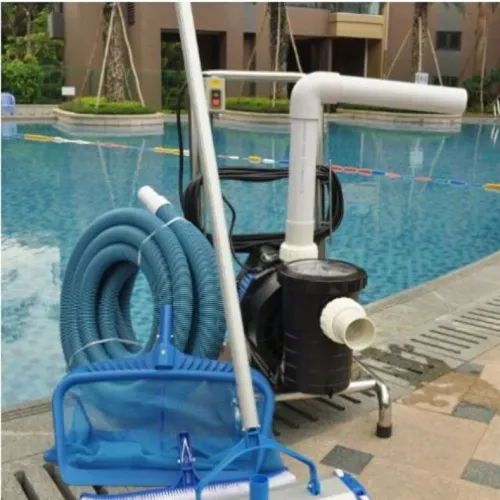
| Pump intake | Submergence at the lowest water level | Keep the intake flooded to prevent air draw, vortices and unstable flow |
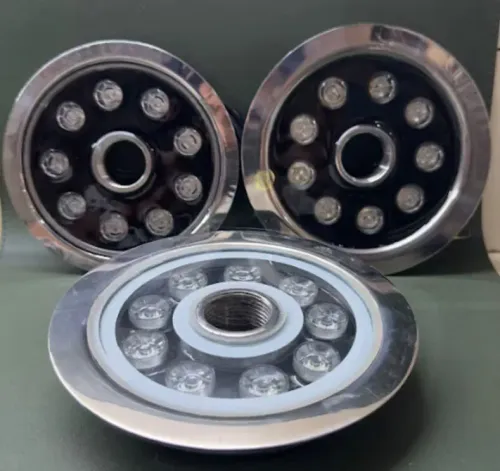
Treat lighting as part of the measurement review. Concealed or evenly distributed underwater lights usually give a cleaner outline; one bright light close to the sheet reveals ripples, scale and uneven thickness.
How Do You Match the Nozzle to the Pump?
Match the nozzle to the pump at the duty point, not by nominal inlet size. Obtain the nozzle’s flow-pressure curve or a test result showing flow, nozzle operating pressure, dome diameter and dome height. Select the flow and pressure that produce your target dimensions.
Calculate total system demand before comparing equipment. Include elevation, pipe friction loss, and losses through every elbow, tee, valve, reducer, filter and connection. Then plot the required flow and total head against the pump curve; the pump’s operating point must meet the nozzle requirement after those losses, not just its advertised maximum flow.
| Pressure condition | Visible result | Corrective action |
|---|---|---|
| Low pressure or flow | Incomplete canopy, broken streams and a dome below the target diameter | Increase available head or select a lower-demand nozzle |
| Excessive pressure or flow | Mist, excessive splash and a dome that extends beyond the basin | Throttle only within the nozzle’s specified range or choose a suitable nozzle |
| Unstable pressure | Pulsation, changing height and one-sided sheet thickness | Stabilise the supply and remove restrictions upstream |
| Uneven approach flow | A thicker sheet on one side or a visibly distorted dome | Rework the approach piping |
Place a straight approach section before the nozzle. An elbow, tee, partially closed valve or reducer immediately upstream can twist the flow and destroy symmetry. Use a stable pressure supply, and verify the final pattern with the actual pipework, water level and basin before approving the installation.
How Do Water Quality and Installation Conditions Protect the Pattern?
Narrow annular passages need protection: one scale flake or leaf can cause annular outlet blockage. For pool, reclaimed or debris-bearing water, match fountain nozzle filtration to the smallest opening, not the pipe. Install a removable strainer with strainer access and a flush connection. Inspect fountain water quality, then remove scale and algae before deposits harden.
| Option | Pattern benefit | Maintenance and water cost |
|---|---|---|
| Fine, low-water-volume sheet | Produces a thinner, more delicate canopy with lower water demand | Needs cleaner water, finer filtration, frequent inspection and tighter pressure control |
| Larger, less-clog-prone outlet | Tolerates suspended debris and deposits better | Requires more flow, pump capacity, basin recovery volume and stronger pump duty |
Stainless steel selection must follow chlorine, salt, pH and chemical dosing; grade alone does not prevent corrosion. Keep dissimilar metals apart and prevent stagnant deposits. Outdoors, shield the dome from crosswind or lower its operating height, then control splash at the basin edge. Otherwise wind makes canopy asymmetric and pushes water outside the catch basin.
What Should a Supplier Provide Before You Approve the Nozzle?
Before approval, require evidence that the nozzle will produce your specified dome at the available duty point, not just a catalogue photograph. “Umbrella,” “mushroom,” “dome” and “water bell” are inconsistent labels; similar names can describe different outlet geometries.
1. Ask for a section drawing, exact connection size and thread or flange detail, material specification, target dome diameter and height, and an installation drawing showing nozzle elevation, basin clearance and mounting orientation.
2. Require a flow-pressure table or test result stating flow, pressure, dome diameter and dome height at each operating point. Include acceptable water-quality limits, such as filtration requirement, suspended debris tolerance, pH range and chlorine or salt exposure.
3. Have the umbrella nozzle supplier check pump duty against the pump curve after adding pipe, elbow, tee, valve, reducer, filter and elevation losses. Approve only after receiving a test video or sample run at your specified flow and pressure.
4. Obtain replacement details for seals, screens and inserts, including part identification and access method. A low-pressure, fine sheet can clog faster; a larger outlet uses more water but reduces maintenance risk.
A rain-dance nozzle comparison is not interchangeable with a controlled dome nozzle, and neither a flower nozzle nor an irrigation rain gun is designed for this near-field curtain. Samudra Industries can add useful value by checking the complete nozzle, pump, pipe and basin specification before supply rather than matching only the inlet size.
Frequently asked questions
What creates an umbrella-shaped water dome?
A circular annular outlet sends water outward as a thin radial sheet. Gravity then bends the sheet downward into a circular water curtain.
Which measurements must you take before ordering?
Measure the desired dome diameter, nozzle height above the basin, available water depth, pipe size and pump-room connection route.
How do you match an umbrella nozzle to the pump?
Compare the nozzle’s required flow and pressure at the intended operating point with the pump curve, pipe losses and elevation.
How do water quality and installation conditions affect the pattern?
Sediment, scale, blocked outlets, uneven mounting and wind can distort the sheet. Filtration, cleaning access and a level installation protect the pattern.
What should a supplier provide before nozzle approval?
Request the nozzle dimensions, connection size, material, required flow, operating pressure, expected pattern diameter and installation drawing.