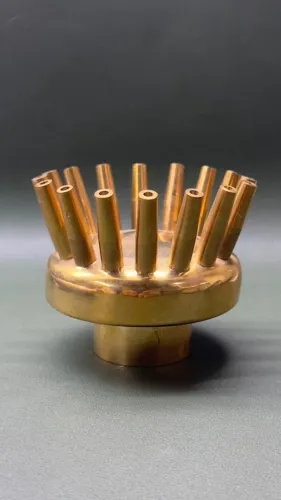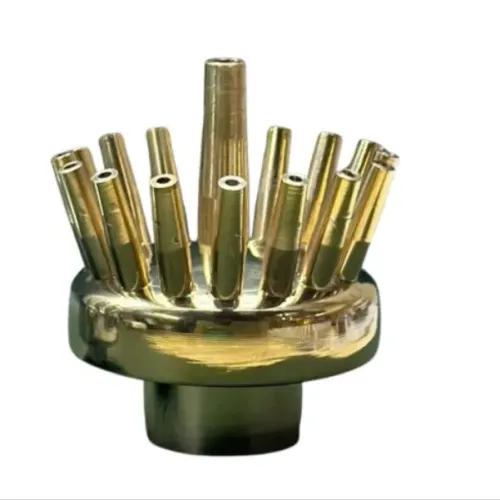
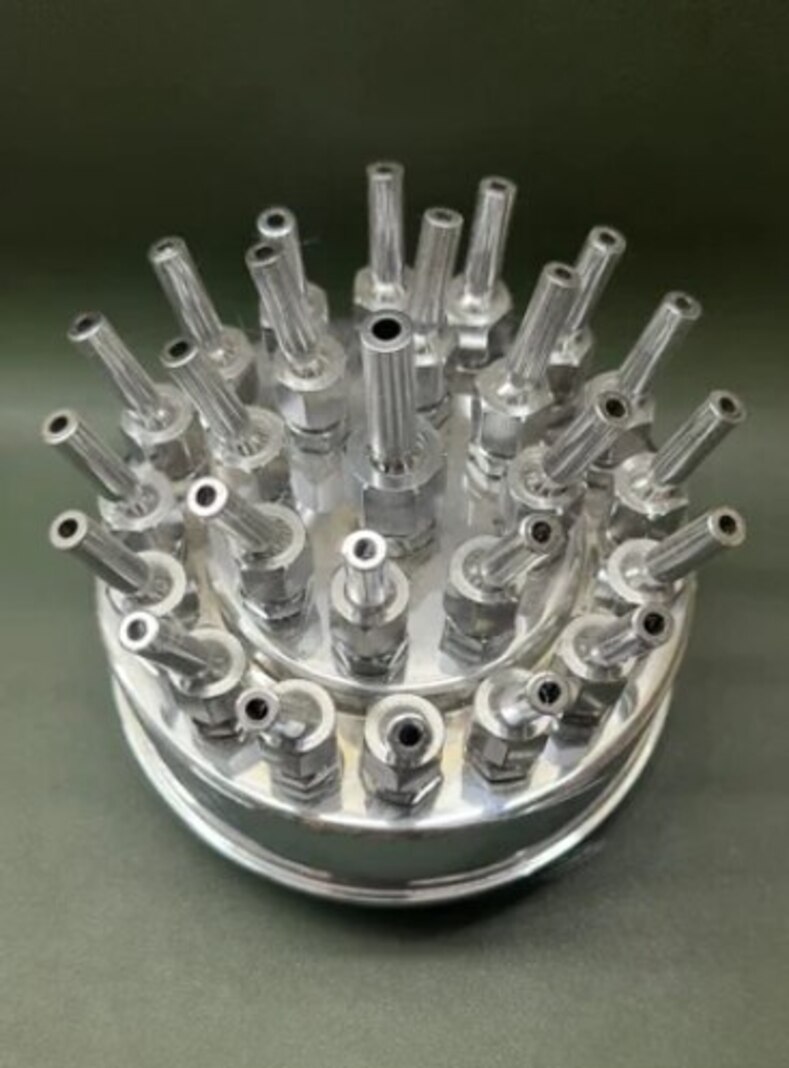
A nozzle that looks right in a catalogue can produce the wrong height, spray diameter or symmetry once it meets your pump, pipework and water quality. By defining the visual effect first, then checking hydraulic data, dimensions, materials and maintenance access, you can compare suppliers on installation performance rather than product names alone.
Key takeaways
- Start with the intended water shape, height, spread and movement.
- Request flow rate and pressure data measured at the nozzle.
- Confirm the nozzle matches pumps, pipes, filters, valves and controls.
- Compare material quality, pattern stability, spare parts and documentation.
Start with the display effect, not the nozzle name
Choose a supplier by the water shape you want visitors to see, then ask for the nozzle geometry and test data that produce it.
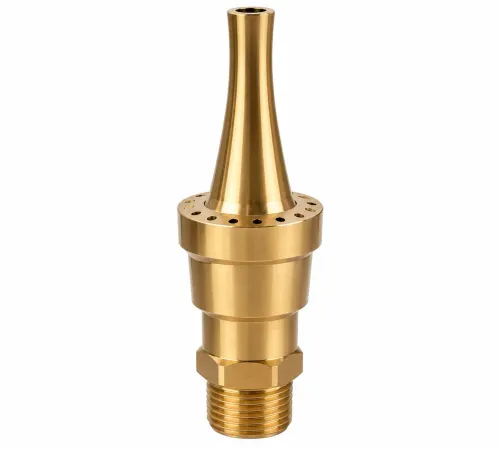
- Vertical jet: select a stable, low-splash nozzle and compare height at the intended pressure and nozzle elevation.
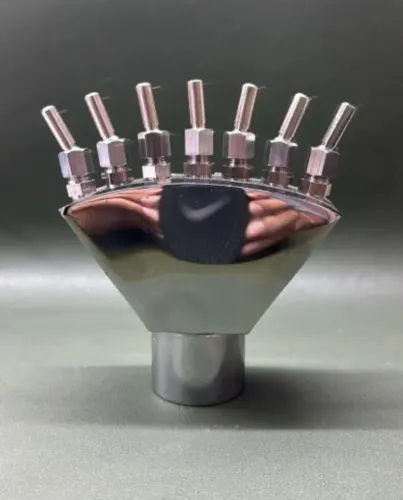
- Radial burst: require even outlets, a stated spray diameter and evidence that each arm receives equal flow.
- Layered effect: match each tier’s elevation, flow and throw so lower rings do not overpower the upper ones.
- Diamond pattern: confirm nozzle spacing, orientation adjustment and a layout drawing showing how intersecting jets remain symmetrical.
- Rain curtain or mist: request droplet-size information and wind limits; fine spray drifts far more than a coherent jet.
- Interactive splash feature: check the supplier’s response-time, safe operating envelope and provision for fast isolation.
Do not compare a catalog’s nominal flow rate with another supplier’s figure until both state test pressure, water temperature, nozzle orientation, upstream connection and whether the result was measured or calculated. For a multi-nozzle display, request a performance table or curve across the actual pressure range, not one headline value.
Ask for a drawing that shows the inlet, body height, immersion depth, mounting method, adjustment range, service access and nozzle spacing. For submerged intakes, verify minimum water depth, intake clearance and anti-vortex protection; air entrainment makes jets pulse. Prefer cleanable or replaceable orifice inserts where scale or debris can alter a small jet’s appearance.
Demand hydraulic data measured at the nozzle
A quoted flow rate means little unless the supplier states where and how it was measured. Require figures taken at the nozzle inlet, with water temperature, nozzle orientation, upstream connection, test pressure and measured-versus-calculated status recorded.
| Figure | Request for comparison | Why it matters |
|---|---|---|
| Flow rate | Litres per minute at each stated inlet pressure | A nominal flow rate cannot predict basin level or pump demand |
| Operating pressure | Pressure range measured at the nozzle inlet | Pump-discharge pressure ignores system losses |
| Pump head | Total dynamic head, including elevation, pipe, valve, fitting and manifold losses | Nameplate head does not prove the nozzle will reach its target |
| Throw height | Height at each pressure and flow condition | Pressure changes do not scale height or flow linearly |
| Spray diameter | Diameter at a stated height, pressure and wind condition | The same nozzle can produce different coverage in different tests |
For a fixed geometry, flow rate rises roughly with the square root of pressure difference: doubling pressure produces about 1.41 times the flow, not twice. Ask for a performance curve covering the actual operating pressure range, especially in a multi-nozzle display, rather than one nominal point.
For wind-exposed fine spray, request droplet size, nozzle elevation and the wind speed used for testing; nominal throw height alone cannot predict drift. For submerged intakes, obtain minimum water depth, intake clearance, anti-vortex arrangement and minimum operating level. Air entrainment can make the pump lose performance and cause pulsing.
Check whether the nozzle fits the complete fountain system
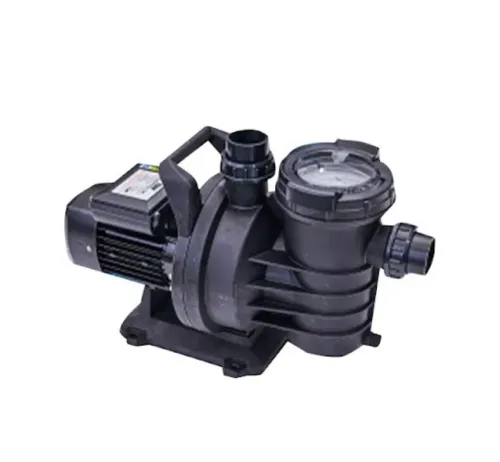
Verify the nozzle at its inlet, then work backward through the pump and distribution network. Match the supplier’s nozzle inlet pressure and flow to the pump curve at the required duty point; pump nameplate pressure is not enough. Subtract static elevation, pipe friction, valve losses, fittings and manifold losses from the pump’s available head.
Check the complete hydraulic path before approving the nozzle:
- Confirm the pump supplies the required flow after total system losses, not only at discharge.
- Measure or calculate pressure at the nozzle inlet with the intended valve position and operating water level.
- Check that the pipe’s internal diameter, length and fittings do not create excessive pipe friction.
- Confirm the valve can regulate the branch without starving nearby nozzles.
- Compare manifold branch lengths, elbows and elevations, then use individual balancing valves or calibrated restrictors for hydraulic balancing.
- Match the strainer and filter to the nozzle’s smallest passage, required cleanable area and permitted pressure drop; a coarse pump strainer can still allow blockage.
- Confirm the basin maintains the supplier’s minimum submergence, suction clearance and operating water level.
Laminar and clear-stream nozzles need extra scrutiny. Obtain the required straight-pipe approach, inlet orientation, filtration level and maximum pressure variation; upstream turbulence or entrained air can turn a clear jet into a segmented stream.
Request a system drawing showing pump duty point, pipe sizes, valve locations, manifold branches and nozzle elevations. Test the assembled system at the actual basin level before fixing the final nozzle setting.
Verify dimensions, materials and pattern stability before buying
A supplier drawing, not a catalogue photograph, determines whether the installed display will fit, resist corrosion and stay symmetrical. Request the actual inlet thread standard, nominal nozzle size and body dimensions; a nominal connection size does not reveal the internal passage or removal method.
1. Check the drawing against the installation. Confirm connection size, overall height, immersion depth, adjustment range, mounting method, orientation limits, service access and drainage provisions. Measure the available clearance from the water surface, basin floor and nearby fittings.
2. Match the manufacturing tolerances to the visual effect. Require nozzle-to-nozzle spacing, outlet height and angular tolerances for every unit. Small differences become obvious in a radial burst, layered effect or symmetrical jet, especially when nozzles are installed in a large array.
3. Specify the material and finish, not just “stainless steel.” 316L stainless steel gives better chloride-pitting resistance than 304, but chlorinated water can still attack it in stagnant crevices, deposits and low-flow zones. Ask how weld heat tint is removed, whether welds are passivated and whether the geometry traps water.
4. Test pattern stability at the installed conditions. For a laminar or clear stream, obtain the required straight-pipe approach, inlet orientation, filtration level and maximum pressure variation. For fine spray, request droplet-size and wind-performance limits; wind can distort small droplets long before it affects a large coherent jet.
Compare suppliers on maintenance, controls and documentation
Approve a nozzle only after the supplier supplies drawings, measured test data and a maintenance plan for your installation. Request connection size, overall height, immersion depth, adjustment range, nozzle-to-nozzle spacing, drainage provisions and service access; a nominal thread alone does not show whether you can remove the nozzle without draining the basin.
| Evidence to request | Why it matters | Reject if missing |
|---|---|---|
| Maintenance drawing and parts list | Confirms descaling access, replaceable inserts, drainage and cleaning intervals | The nozzle is sealed in place or no spare parts are identified |
| Filtration rating and pressure-drop limit | Prevents particles from blocking the smallest passage; check the required cleanable filter area and blockage interval | The supplier gives only a generic pump-strainer size |
| Measured performance curve | Compares flow across your actual pressure range; require test pressure, water temperature, orientation, inlet connection and measured-versus-calculated status | The supplier offers one unqualified catalogue flow rate |
| Control and stability limits | Establishes maximum pressure variation, valve response, straight-pipe approach and inlet orientation for laminar or sequenced effects | No basis is given for pulsing, segmented streams or timing errors |
| Wind and installation limits | Relates droplet size and elevation to site wind, not merely nominal throw | Fine spray is approved without wind-test conditions |
For a controlled display, ask for wiring or valve-interface details, sequencing limits and fault behaviour. A supplier such as Samudra Industries should also identify the approved filtration, descaling method and access procedure for the exact nozzle, not just the product family.
Related products
 | Fountain Nozzle And Jet Nozzle 3/8 Inch Rain Dance Fountain Nozzle 1 Inch Diamond Cluster Fountain Nozzle – Samudra Industries Create a striking and dynamic water display with the 1 Inch Diamond Cluster Fountain... View product → |
 | Fountain Nozzle And Jet Nozzle 2.5 Inch 3 Stage Fountain Nozzle Samudra Industries Create stunning multi-layered water displays with the 2.5 Inch 3 Stage Fountain Nozzle from Samudra Industries. View product → |
Frequently asked questions
How should you begin choosing a fountain nozzle supplier?
Define the display effect first, including water shape, height, spread, movement and viewing distance. Then ask which nozzle geometry and test data produce it.
What hydraulic information should a fountain nozzle supplier provide?
Request flow rate and operating pressure measured at the nozzle, along with the test conditions used to produce the stated pattern.
How do you check whether a fountain nozzle fits the complete system?
Match the nozzle to the pump curve, pipe diameter, filters, valves, control system, water quality and available operating pressure.
What should you verify before buying fountain nozzles?
Check connection dimensions, material, finish, spray-pattern stability, spare-part availability, installation instructions and maintenance documentation.
Related products
 | Fountain Nozzle And Jet Nozzle 1"Inch Diamond Cluster Fountain Nozzle 3/8“ & 1/2” Inch Spray Fountain Nozzle – Samudra Industries Enhance your water features with the versatile 3/8“ & 1/2” Inch Spray Fountain Nozzle... View product → |
 | Fountain Nozzle And Jet Nozzle 1 Inch Diamond Fountain Nozzle Samudra Industries Bring elegance and symmetry to your water features with the 1 Inch Diamond Fountain Nozzle from Samudra Industries. View product → |
 | Fountain Nozzle And Jet Nozzle 1" Inches 3 Stage Fountain Nozzle 1 Inch 3 Stage Fountain Nozzle – Samudra Industries Enhance your fountain design with the elegant and dynamic 1 Inch 3 Stage Fountain Nozzle from... View product → |
 | Fountain Nozzle And Jet Nozzle Samudra Industries Enhance your fountain aesthetics with the 1 Inch 3 Stage Nozzle from Samudra Industries. View product → |